Is Your Building Covered Under the Atlanta Commercial Building Energy Efficiency Ordinance?
Here's How to Find Out
The City of Atlanta has made significant strides in promoting sustainability and energy efficiency through its Commercial Building Energy Efficiency Ordinance. This ordinance aims to reduce energy consumption and greenhouse gas emissions, contributing to a greener, more sustainable city. If you own or manage a commercial building in Atlanta, you need to understand whether your property falls under the purview of this ordinance. Here’s a guide to help you determine if your building is covered and what steps you need to take to comply.
What is the Atlanta Commercial Building Energy Efficiency Ordinance?
The Atlanta Commercial Building Energy Efficiency Ordinance, enacted in 2015, mandates that certain commercial buildings in the city benchmark their energy and water consumption annually, an conduct an energy assessment every 10 years. The goal is to improve energy efficiency across the city by requiring transparency and encouraging owners to implement energy-saving measures.
Key Criteria for Coverage
To determine if your building is covered under the ordinance, you need to consider the following criteria:
1. Building Size
The ordinance applies to commercial buildings with a gross floor area of 25,000 square feet or more. This includes office buildings, retail spaces, hotels, mixed-use buildings, and yes, multifamily as well.
2. Property Use Type
The ordinance primarily targets commercial properties. This includes office buildings, retail spaces, hotels, mixed-use buildings, and yes, multifamily as well. However, multifamily below 4 units is exempt (however, these are hardly ever greater than 25,000 square feet). Single family homes are exempt.
3. Location
Your building must be within the city limits of Atlanta. Properties located outside the municipal boundaries are not subject to the
ordinance, regardless of size or use type.
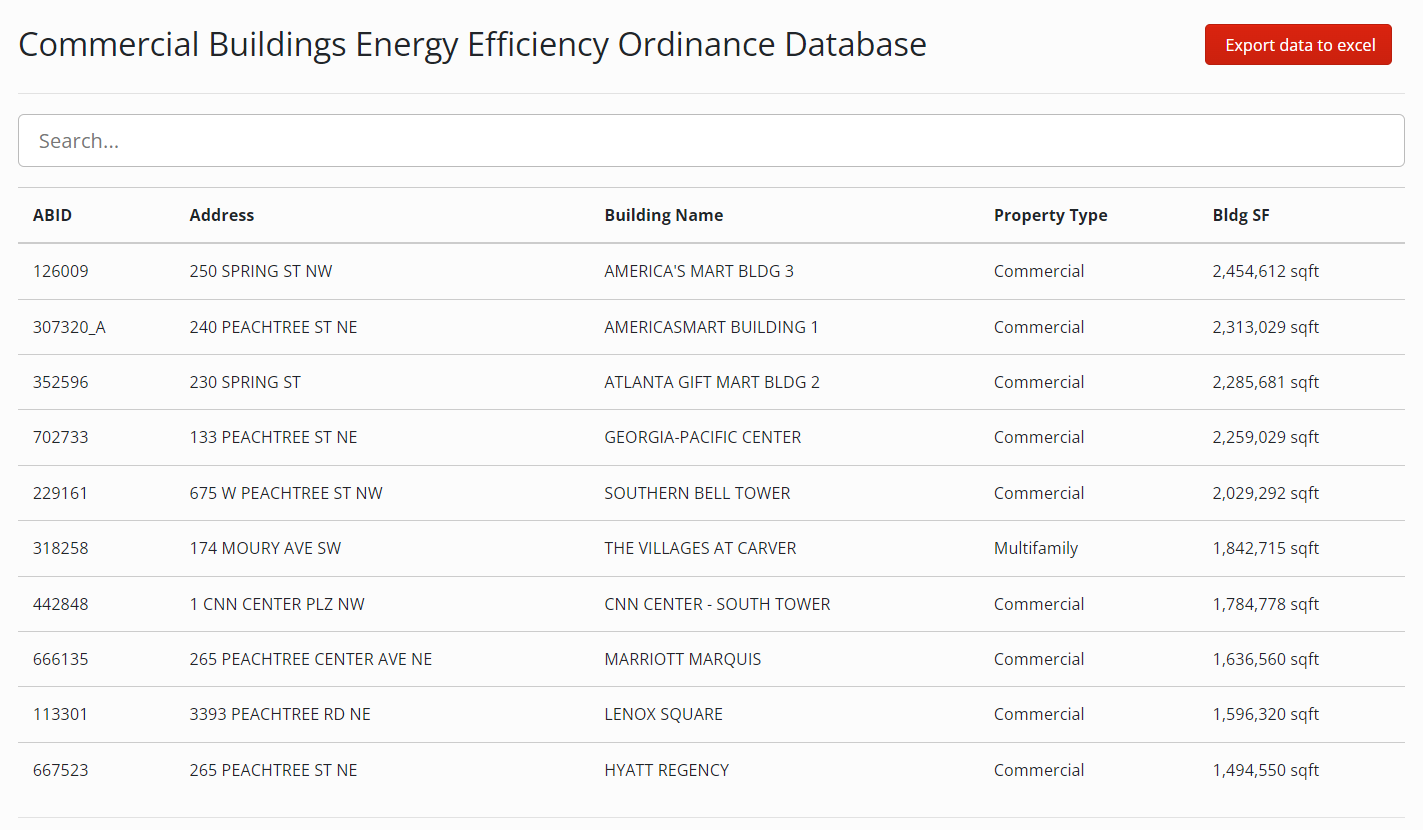
If you meet all of these criteria, your building should be assigned an Atlanta Building ID (ABID) number
Atlanta provides resources and tools on their official website (https://atlantabuildingbenchmarking.wordpress.com/) to help building owners understand the ordinance and determine their status. The city’s provides an online building database (pictured above) to identify your property and ABID: https://web.atlantaga.gov/coabuildings/#/
Compliance Requirements
If your building is covered under the ordinance, you must:
1. Benchmark Energy and Water Use:
Utilize tools like ENERGY STAR Portfolio Manager to track and report your building’s energy and water consumption annually.
2. Submit Reports:
Ensure timely submission of benchmarking reports to the City of Atlanta. Deadlines are typically set for June 1st each year.
3. Disclose Information:
Publicly disclose energy and water benchmarking data as required. Transparency is a key component of the ordinance to drive improvements in building efficiency.
Benefits of Compliance
Complying with the Atlanta Commercial Building Energy Efficiency Ordinance not only helps the city achieve its sustainability goals but also offers several benefits to building owners:
- Cost Savings: Enhanced energy efficiency can lead to significant reductions in utility bills.
- Increased Property Value: Energy-efficient buildings are more attractive to tenants and buyers, potentially increasing property value.
- Environmental Impact: Contributing to the reduction of greenhouse gas emissions aligns your business with global sustainability efforts, enhancing your corporate responsibility profile.
Conclusion
Understanding whether your building is covered under the Atlanta Commercial Building Energy Efficiency Ordinance is the first step toward compliance and reaping the associated benefits. By evaluating your building’s size, use type, and location, you can determine your obligations under the ordinance. Engaging with resources and professionals will further ensure that you meet all requirements, positioning your property as a leader in energy efficiency.
For personalized assistance with your energy efficiency goals and compliance with the Atlanta ordinance, reach out to Verdius Energy. Our team of experts is here to help you navigate the complexities of the ordinance and share options for you to increase the performance for your building.
Contact Verdius Energy today to get started on your path to energy efficiency and sustainability!